

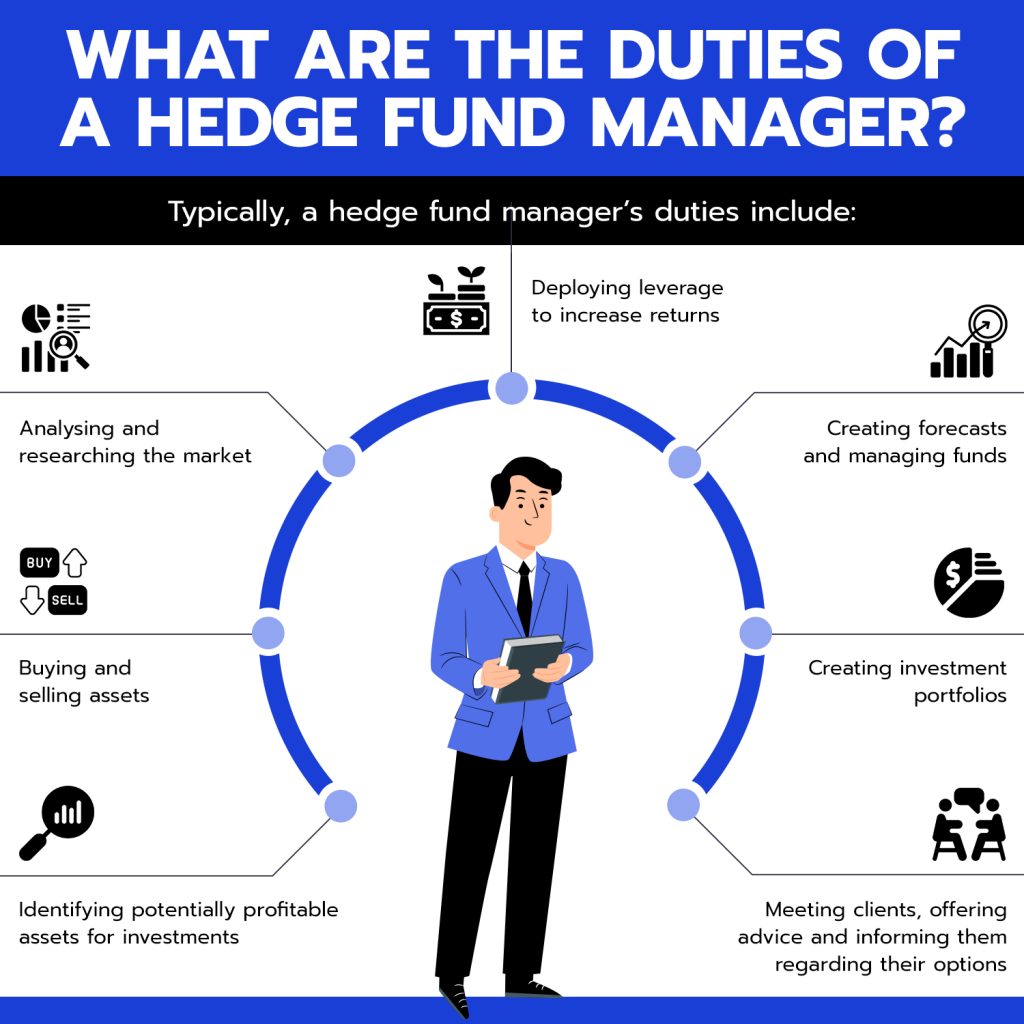
Hedge fund managers make investment decisions while managing and overseeing the operations of a hedge fund. These managers may be individuals or firms, and to be successful they must have a clearly defined investment strategy, maintain a competitive advantage, and have a risk management strategy – as well as a well-developed sales and marketing plan.
Consistent Investment Strategies
Good hedge fund managers tend to deploy disciplined and consistent investment strategies and processes that are risk aware and demonstrably repeatable. As well as establishing confidence of the manager’s ability to consistently deliver within agreed-upon risk parameters, this approach offers insulation from potential ‘headline risk’ should performance be significantly below expectations.
Proper Risk Oversight
Risk oversight is an essential element of a hedge fund manager’s role and crucial for operational excellence. To this end, effective hedge fund managers must have a well-thought-out strategy regarding regulatory, counterparty and operational risks.
Robust Operational Infrastructure
It’s imperative for hedge fund firms to have robust operational infrastructure in order to ensure the necessary due diligence takes place and meet the increasing demands from industry regulators and investors. Having this infrastructure in place from the beginning allows firms to more easily scale their operations, meaning they can grow in line with market conditions without risking reporting failures or operational bottlenecks.
Managing Investor Relationships
Experienced professionals such as Ben Waters, trader, also know the importance of managing investor expectations and relationships in terms of achieving sustained success. Hedge fund managers should be clear about the sort of performance possible under a specific set of market conditions to avoid potential frustration for investors and an undermining of their own credibility. For many successful hedge fund managers, this comes down to resisting both overpromising and aggressive pitches to potential investors.
Nurturing a Culture of Integrity
Great hedge fund managers create and follow well-designed procedures and rules that reflect high ethical standards. As well as setting a personal example in this regard, these managers dedicate adequate resources to ensure compliance and good practice. This should include a process of independent balances and checks, conducted by a neutral third-party, around risk management, valuation, cash movements and trade settlements.
Excellent Client Interface
A further characteristic of all great hedge fund managers is their excellent client interface and service. This means high-quality communications, a dedicated customer service channel, the availability to offer solutions resources and a willingness to provide transparency.
For more information about getting started as a hedge fund manager, take a look at the embedded PDF.